Understand your options before choosing a service. Start with safety, the decisions that affect everyday life, and the kind of help you actually need.
Reviewed October 10, 2026. General U.S. information, not legal advice. State rules and individual plan contracts control.
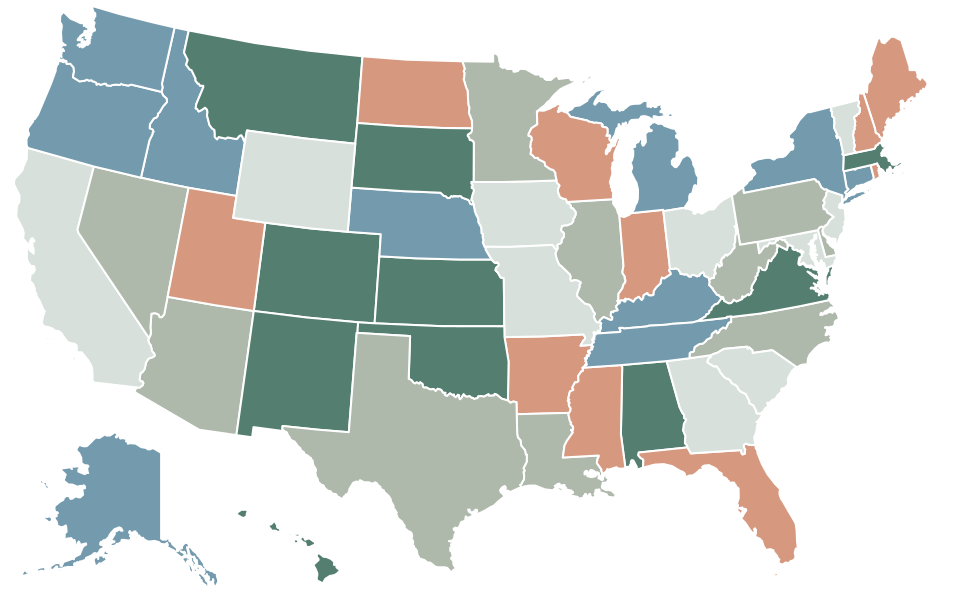
50 states, side by side
Compare divorce laws in two states
Explore residency, timing, property, support, parenting, and agreed processes. Each comparison links to its sources and explains questions to take to your plan lawyer.
Feeling intimidated, controlled, or unsafe changes the next step. Mediation is not a good default fit when someone cannot disagree freely. Speak privately with a domestic-violence advocate or qualified lawyer about safety and options before negotiating.
Immediate danger: call 911. For domestic-violence support, contact the National Domestic Violence Hotline: 800-799-7233, or text START to 88788. Support is different from contacting law enforcement.
You may be trying to keep work, parenting, housing, and money going while facing unfamiliar legal decisions. If you already have a prepaid membership or workplace legal benefit, a covered consultation can be a practical first step: ask a lawyer what needs attention now, what can wait, and what kind of help the next task requires.
The value is not that a plan makes divorce easy. It may give you access to individual advice before you sign, miss a deadline, or buy the wrong service. Check eligibility and scope first; a plan name is not a promise of divorce coverage. Here, prepaid help includes memberships and workplace legal insurance; a forms subscription is a different kind of product.
Understand the next decision
A consultation may help you identify deadlines, questions about temporary arrangements, and the right local process. Advice does not mean the lawyer has taken responsibility for filing or attending court.
Review before committing
If your benefit permits it, ask for review of a proposed settlement and its practical obligations. Confirm page limits, revisions, and whether outside counsel affects eligibility for a narrowly defined divorce benefit.
Get help with the actual work
Some plans cover specified negotiation or representation; others offer a discount or only limited advice. Ask for the task and stage in writing, not just whether the topic is listed.
There is no single exclusion list shared by every prepaid product. Do not assume that all plans exclude contested divorce, all cover agreed divorce, or all reject an existing problem. These are the points that can turn an expected benefit into a separate bill or a need for other help.
1. The phase of the case
Consultation, reviewing an agreement, negotiating, temporary hearings, trial, appeal, and later modifications are different tasks. An uncontested-only benefit may stop fitting when a dispute develops. Reconfirm coverage before the next stage.
Waiting periods, earlier events, and prior attorney involvement are not identical rules. MetLife says existing matters can be covered unless an attorney was retained before eligibility; LegalShield's listed uncontested benefit has a 180-day wait. Do not delay urgent help to qualify.
Family coverage does not guarantee that both spouses receive divorce services against each other. Plans can restrict spouse/dependent benefits in a conflict. A lawyer cannot act as both sides' advocate in the same opposed litigation; ask for separate conflict checks.
Check network availability, relevant family-law experience, hours or dollar limits, and out-of-network reimbursement. A benefit for your attorney does not establish payment for a mediator, collaborative team, replacement lawyer, or expert.
A fee discount still leaves you paying a bill. Court filing, service, experts, and work beyond a cap may be extra; ask for an itemized estimate. A legal-service benefit does not pay your rent, support obligation, or joint debt merely because a lawyer advises on it.
No membership controls the judge's decision, your spouse's cooperation, or the court calendar. Legal help is not emergency response, safe housing, or counseling. A lawyer may help pursue legal protection, but do not wait for a plan callback if safety is at risk.
A divorce process shapes more than a bill: it changes who you talk to, what you must prepare, how decisions get made, and what happens when you disagree. These paths can overlap. Filing a case does not mean every issue goes to trial, and reaching an agreement does not itself end the marriage.
One everyday problem, four ways to approach it. Imagine two spouses trying to arrange school pickups and pay for two households. The examples below are hypothetical, not client stories or predicted outcomes. They assume negotiation can happen safely; if someone feels intimidated, controlled, or unsafe, start with confidential safety support.
Mediation
You make the choices. A neutral helps the conversation.
The human trade-off: more say in the arrangement, but more responsibility for deciding whether it works for you. A productive conversation is not the same as independent advice that a proposed deal protects your interests.
The same family, in practiceA mediator might help turn an argument about pickups into a discussion of work shifts, travel, and backup care. You and your spouse still have to consider the budget, evaluate proposals, and agree. A neutral mediator does not choose the winner or become either spouse's personal lawyer.
Your part
Prepare records, explain your needs, and be able to disagree freely. Get independent legal advice before committing to terms you do not understand.
If it stalls
A mediator cannot force a settlement. Unresolved issues may need lawyer-led negotiation or a court decision; earlier sessions do not guarantee a finished case.
Takeaway
Useful help with reaching a decision is different from someone making or checking that decision for you. Do not use agreement as the measure of success if it was obtained through pressure.
Where a prepaid plan fitsA permitted advice or review benefit may help you prepare questions and evaluate proposed terms independently. It does not establish payment for the neutral mediator or the whole divorce. Confirm the review scope and any restrictions on prior attorney involvement. Check the limits.
Costs, privacy, and limits of mediation
Budget for sessions, preparation, and any independent legal review. More sessions can mean more expense. Ask about confidentiality and its exceptions; an eventual agreement may be filed with the court. Settlement mediation is the focus here; court-connected parenting mediation can operate under different local rules. A court order to attend does not mean you should ignore safety concerns or simply miss the appointment: ask about screening, exemptions, or protective arrangements.
Your own lawyer, within a shared settlement process.
The human trade-off: you have an individual adviser while working toward a joint solution, but both spouses must sustain the process. Paying for a professional team does not guarantee cooperation or agreement.
The same family, in practiceEach spouse can discuss concerns privately with their lawyer before a joint meeting. A financial professional might help compare two-household budgets; a child specialist might help explore a practical schedule. Those extra perspectives can make the problem clearer, while also adding meetings and fees.
Your part
Share reliable information, prepare for meetings, and weigh compromises with your own lawyer. Ask which professionals are needed, what each does, and what each charges.
If it stalls
Collaborative participation agreements commonly disqualify the collaborative lawyers from handling contested litigation. A switch can mean new lawyers, new preparation, and further expense. Read that condition before signing.
Takeaway
This buys supported negotiation, not a guaranteed inexpensive exit. Understand the possible restart cost while you still have the choice of process.
Where a prepaid plan fitsA plan may contribute eligible legal advice or attorney work if this process and professional are authorized. Do not assume it pays for both lawyers, coaches, financial specialists, or new counsel if collaboration ends. Confirm each role before committing to a team. Check the limits.
Costs, privacy, and limits of collaboration
Budget for two lawyers and any agreed financial, parenting, or other specialists. Ask who approves adding professionals and how progress and costs will be reviewed. Private meetings do not eliminate required court filings. Safety concerns, unreliable disclosure, or inability to participate freely require separate assessment before choosing this route.
Your advocate carries the discussion; you make the settlement choice.
The human trade-off: less need to negotiate directly with your spouse, but you still supply the facts and decide what to accept. Having a lawyer does not make the paperwork, uncertainty, or difficult choices disappear.
The same family, in practiceYou give your lawyer the work schedule and household budget, explain which arrangements are feasible, and review a written proposal. The lawyers exchange revisions instead of you debating every detail directly. Ask what a disputed term would mean in practice and what another round of work would cost.
Your part
Gather documents, respond to questions, and give clear priorities. Tell your lawyer which communication arrangements you need and whether there are urgent safety or payment concerns.
If it stalls
Your lawyer may advise asking the court to decide unresolved issues. Confirm whether the engagement covers hearings or trial, whether more funds are needed, and who handles deadlines.
Takeaway
Professional advocacy can create distance from conflict, not remove every burden. Separate the importance of a disputed term from the cost and risk of pursuing it; do not sign just to end the conversation.
Where a prepaid plan fitsAn included negotiation or representation benefit may support your own lawyer; a narrower plan may offer advice or a discounted paid engagement. A consultation alone does not buy ongoing negotiations. Get the authorized stage, billing terms, and responsibility for deadlines in writing. Check the limits.
Costs, privacy, and limits of lawyer-led negotiation
Ask about hourly or fixed-fee scope, deposits, document review, revisions, and experts. An offer is not an agreement just because a lawyer sent it. Ask which communications are privileged: advice from your lawyer, exchanges with the other side, and court filings are not interchangeable. A negotiation can fail despite good preparation.
You present the evidence. A judge decides disputed issues.
The human trade-off: a route out of deadlock, with less control over the result and schedule. Needing a court decision is not a personal failure, and using the court does not require refusing every opportunity to settle.
The same family, in practiceIf the spouses cannot agree on parenting or support, they may ask for appropriate temporary orders and later present unresolved issues for decision. That can mean preparing financial records and other evidence, arranging time away from work, and following the court's timetable. The judge may choose an arrangement neither spouse proposed.
Your part
Meet deadlines, complete required disclosure, and present relevant evidence rather than assuming the judge knows your history. Ask what hearings require and what help is available with preparation.
If it stalls
Hearings, missing information, and court calendars can prolong uncertainty. Ask about interim relief and settlement of individual issues; the existence of a case does not guarantee an immediate order.
Takeaway
An order can settle a legal question without repairing trust or providing emotional closure. Prepare for the practical consequences of the decision, not a promise that the hearing will feel vindicating.
Where a prepaid plan fitsSome benefits include contested-divorce attorney work; others stop at advice, an agreed divorce, or a fee discount. Ask separately about temporary orders, trial, appeals, later modifications, and costs. A benefit cannot promise an order or a result. Check the limits.
Costs, privacy, and limits of court decisions
Budget for filing, service of papers, preparation, legal help, and any experts. Ask about fee waivers and limited-scope assistance. Public access to records and hearings varies; sensitive information may need specific protection. Temporary relief and final decisions have different procedures. A hearing date, legal minimum wait, and final divorce date are not the same thing.
The everyday examples and human trade-offs are editorial illustrations of the sourced process differences, not measured outcomes, therapy advice, personalized recommendations, or a price ranking. Local rules, engagement terms, and the facts of a case control. Legal and safety help can be needed at any stage.
Everyday life comes first
The questions worth sorting out early
You do not need to resolve the whole divorce today. Use these topics to prepare for a court self-help appointment, legal-aid call, or focused consultation.
Children & parenting
Ask about where children will live, decision-making, school and medical needs, exchanges, child support, and any existing orders. Safety concerns need specific attention.
What pays the rent or mortgage, utilities, food, and insurance while the case is pending? Ask about access to essential funds and temporary use of the home, rather than assuming leaving or staying settles ownership.
Debts & property
List accounts, loan balances, property, businesses, and retirement benefits. Ask how an agreement affects responsibility to creditors and whether a separate retirement order or professional review is needed.
Ask whether local procedures allow temporary parenting, support, home-use, or bill-payment orders. These are requests for interim help, not promises of eligibility or an outcome.
Marriage information, papers already served, existing court orders, and any upcoming deadlines.
Recent income records, tax returns, bank and credit statements, loan balances, housing documents, insurance, and retirement statements.
A list of assets and debts, regular household expenses, and relevant parenting schedules and children's costs.
Keep lawful copies securely. Do not break into an account, guess passwords, or put yourself at risk to obtain records. Ask your lawyer or advocate how to obtain missing information safely.
Examples of financial and parenting forms: Illinois Courts. This preparation list is not a required document list for all states.
Decisions not to rush, and deadlines not to miss
Seek advice before signing a settlement or waiver you do not understand, transferring major assets, changing insurance, or making a major parenting or housing change. Existing orders and local automatic restrictions may matter.
Do not assume splitting a debt in an agreement releases you from the lender's contract.
If papers arrive, write down the response deadline and ask for help promptly. Taking time to understand your choices does not stop a court deadline.
If staying puts you in danger, prioritize safety support. Do not interpret this checklist as a reason to remain in an unsafe home.
Look for the divorce benefit, not just access to a lawyer
Advice, document review, a fee discount, and court representation are different benefits. Check whether you are eligible when the matter is against a spouse who may also be covered. A plan does not mean one lawyer can represent both sides.
Public benefit examples checked October 10, 2026. Not a substitute for your certificate or written coverage confirmation.
Plan or tool
Potential benefit
What needs confirmation
ARAGLegal insurance
Its public materials list both contested and uncontested divorce and describe network-attorney help for covered matters.
Your employer's or individual contract, representation scope, limits, existing-matter rules, and spouse conflicts. Public examples do not prove your case is covered. ARAG coverage overview
MetLife Legal PlansLegal plan
Lists marriage and divorce among personal legal matters, with access to network-attorney advice.
Ask specifically about divorce representation and any cap. Divorce is excepted from its broad no-usage-restrictions claim. Spouse conflicts and attorneys retained before eligibility can affect coverage. MetLife public terms and FAQs
LegalShieldMembership
Advanced and Premium advertise a defined uncontested-divorce benefit. Basic lists a 15% fee discount instead.
180-day wait; named member only; written agreement on all issues; neither party already represented; net marital assets below $500,000. New York requires discounted hourly payments. Read state-specific terms. LegalShield benefit conditions
LegalEASEEmployer plan
The Illinois College employer example includes uncontested-divorce work up to 10 attorney hours and contested-divorce work up to 28.5 hours, with remaining work at a 25% discount.
This sponsor-specific example is not a universal offer. It has different non-network allowances, existing-matter exclusions with a prior-coverage exception, and costs above maxima. Obtain your own current certificate. Illinois College benefit example
Rocket LawyerDocuments & legal access
Divorce-related documents, plain-language guides, and options to seek attorney assistance.
Which attorney service is included or separately priced, state availability, and the engagement scope. Document access or a consultation is not a promise of full divorce representation. Rocket Lawyer divorce resources
We reviewed four marketed services as examples, not a market-share ranking or endorsement. Convenience can be useful when the supported process fits your facts. A form service cannot establish that your agreement is fair or that you should sign it.
Advertised U.S. service-price examples rechecked October 16, 2026; offers, availability, and checkout terms can change. These are not total divorce costs or verified checkout totals.
Service
Useful feature & advertised price
Important trade-off
OnlineDivorce.com
Guided questionnaire, personalized documents, and filing instructions. Advertises a limited-time $199 document-preparation offer.
Some products include 30-day access, then automatic monthly renewal until canceled. Confirm your package's renewal rate and cancellation deadline before paying. To stop renewal, cancel through My Profile before the current term ends; not using the service does not stop billing. Save your documents first: access ends after the paid term, and stored files may be deleted. Cancellation is not a refund; the subscription terms state no refunds or credits for subscription charges. Check add-ons, local forms, refunds, and who files; preparation is separate from optional filing or attorney help. Reviewing forms yourself is not attorney review. Current offer · Subscription terms, checked October 16, 2026
CompleteCase
Prepared documents, filing instructions, phone/email support, and minor updates during initial access. Advertises $299 for the initial 30 days of platform and support access, not a flat price through completion of your divorce.
After 30 days, access automatically renews at $39.99/month unless canceled. To stop renewal, cancel through My Profile before the current term ends; not using the service does not stop billing. Save your documents first: access continues through the paid term, but stored files may be deleted after cancellation. Cancellation is not a refund; the subscription terms state no refunds or credits for subscription charges. It is not a law firm; platform communications are not attorney-client privileged. Pricing and renewal disclosure · Subscription and cancellation terms
3StepDivorce
Immediate form access and changes; $299 in one payment. Installments spread payment, with access available before all payments are made.
Four $84 payments total $336, not $299. Two $157 payments total $314; three $109 payments total $327. Support staff are not lawyers and do not provide legal advice. Payment options and support scope
Divorce.com
Advertises filing/case-manager help at $999, a guided option with four mediation sessions at $1,999, and an attorney-led option at $12,500. State filing fees are additional.
Different tiers buy different work. Confirm attorney availability, engagement terms, mediation suitability, what happens after four sessions, and refund conditions. A case manager is not necessarily your lawyer. Current package descriptions
Your budget = service or plan payments + court and service-of-papers costs + any legal review, mediation, experts, or additional representation.
Divorce.com's filing and mediation tiers stand out in this sample for visibly adding work beyond forms. That can be useful if appropriate, but does not establish better outcomes or a better price for your case. An advertised forms turnaround is not the time to receive a final decree. Check free court forms and fee-waiver instructions first.
Six questions to ask before buying
Does the service support my state, county, children, property, and the particular process I need?
Are both spouses freely agreeing on every required issue? What happens if that changes?
Who reviews the facts: me, software, staff, or my own licensed attorney?
Who files, arranges service of papers, handles rejection or revisions, and attends hearings?
What renews automatically, what is optional, and what qualifies for a refund?
What information will the service collect, who receives it, and is any communication privileged?
Check safety and deadlines. Use support first if you feel unsafe. If papers were served, ask promptly about the response date.
Open your state resource below. Check the appropriate court, local forms, and legal-aid options before purchasing a package.
Write down three questions. For example: temporary parenting arrangements, paying the household bills, and whether a proposed agreement needs review.
Choose the help for that task. Ask legal aid, a court self-help center, or a family-law professional about the next specific step and its cost.
How to get qualified help without committing to a full case
Use your state's bar or court referral resources, then verify the lawyer's active license with the state regulator. The ABA legal-help directory includes referral and licensing resources. Ask about family-law experience, cases like yours, safety-related expertise if relevant, fees, conflicts, and what the written engagement includes.
You can ask about a focused consultation or limited-scope help for a particular task. Availability and suitability vary; agree on who handles the remaining work. ABA: limited-scope representation.
Find local civil legal aid. Programs determine eligibility, issue priorities, and capacity; contacting one does not guarantee representation. Court self-help staff can explain procedures but are not your personal lawyer.
Each guide now has a divorce resource, legal-aid routes, and separate safety and non-emergency law-enforcement information. Some linked packets only fit particular situations; the guide labels those limits.
Choose a state: divorce information and local resources
Sources are linked beside the claims they support. Provider marketing was reviewed, not independently tested as a purchased service. Report factual errors to info@prepaidlegalinformation.com; please do not send private case documents.